
Essential Hajj Duas with English Translation for Your Journey
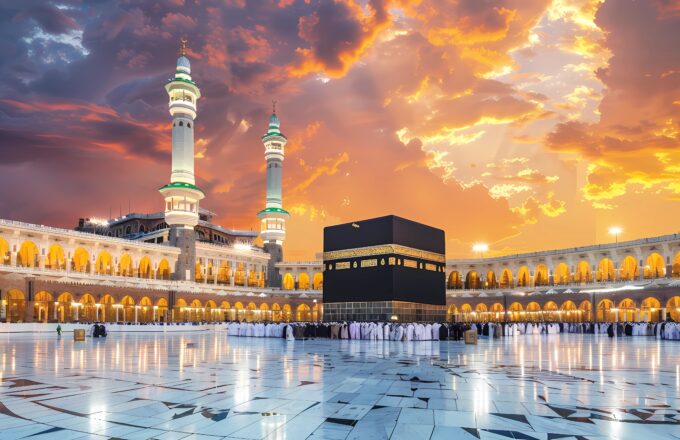
Quick answer: The most essential Hajj duas include the Talbiyah for Ihram, the supplication for goodness during Tawaf, and the declaration of faith on the Day of Arafat. Memorizing these supplications with an accurate English translation ensures pilgrims understand their prayers, making their spiritual journey deeply meaningful and highly rewarding.
Millions of Muslims travel to Mecca each year to fulfill their religious obligations, seeking forgiveness and spiritual renewal through profound supplications. This comprehensive guide provides the most critical hajj duas alongside their English translation, helping you understand exactly what you are asking of Allah at every stage of the pilgrimage. By learning these prayers, whether you are performing the rituals yourself or arranging a proxy pilgrimage like Hajj Badal, you can elevate your connection with the Divine and ensure every step of your sacred journey is rooted in sincerity and devotion.
Understanding Hajj Badal: A Personal and Sincere Proxy Hajj
For individuals who are physically unable to perform the pilgrimage due to severe illness, advanced age, or passing away, Islam provides the provision of Hajj Badal. Hajj Badal is a proxy pilgrimage where a capable Muslim performs the rituals on behalf of someone else.
The core of Hajj Badal lies in the intention (Niyyah) and the dedication of the proxy. To be valid, the person performing the proxy must have already completed their own obligatory Hajj. When arranging this service, families often seek a single, dedicated Muslim who will perform the pilgrimage personally and with absolute sincerity, rather than relying on volume-based travel agencies. Services like YourHajjBadal.com emphasize this personalized approach, dedicating their entire journey to one individual to ensure the sacred trust (Amanah) is fulfilled precisely according to Islamic guidelines.
The Significance of Duas in Hajj
What is the concept of Dua in Islam?
In Islam, Dua is the very essence of worship. It represents a direct, unfiltered conversation between the believer and Allah. Muslims use Dua to express their needs, seek forgiveness, and acknowledge their ultimate reliance on the Creator. Unlike formal prayers (Salah) which have specific physical movements and set times, Dua can be made at any moment.
Why are Duas particularly potent during Hajj?
During Hajj, pilgrims exist in a state of Ihram, which represents purity, humility, and equality. The physical locations of Hajj—such as the Kaaba, Mount Arafat, and Muzdalifah—are historically and spiritually significant sites where prophets made their own supplications. Because pilgrims leave behind their worldly comforts to answer Allah’s call, the prayers made during these specific days and in these holy boundaries hold immense weight.
What are the essential Hajj Duas and their English translations?
Having an accurate dua translation is crucial for non-Arabic speakers. Understanding the words you recite transforms a mechanical ritual into a deeply emotional plea. Below are the most important hajj duas categorized by the stages of the pilgrimage.
Duas for Ihram and Entering Mecca
The journey begins by entering the state of Ihram. The most vital declaration made by the pilgrim is the Talbiyah.
The Talbiyah (Intention and Declaration):
Arabic: لَبَّيْكَ اللَّهُمَّ لَبَّيْكَ، لَبَّيْكَ لَا شَرِيكَ لَكَ لَبَّيْكَ، انَّالْحَمْدَ، وَالنِّعْمَةَ، لَكَ وَالْمُلْكَ، لا شَرِيكَ لَكَ
Transliteration: Labbayk Allahumma labbayk, labbayka la sharika laka labbayk, innal-hamda wan-ni’mata laka wal-mulk, la sharika lak.
English translation: “Here I am at Your service, O Allah, here I am at Your service. Here I am at Your service, You have no partner, here I am at Your service. Truly all praise and blessings belong to You, and so does the Sovereignty. You have no partner.”
Duas for Tawaf (Circumambulation of the Kaaba)
Tawaf involves walking around the Kaaba seven times. While you can recite any personal prayer during this time, a highly recommended supplication is recited between the Yamani Corner and the Black Stone.
Supplication for the Yamani Corner:
Arabic: ربنا آتنا في الدنيا حسنة وفي الآخرة حسنة وقنا عذاب النار
Transliteration: Rabbana atina fid-dunya hasanatan wa fil-akhirati hasanatan wa qina ‘adhaban-nar.
English translation: “Our Lord, give us goodness in this world, and goodness in the Hereafter, and save us from the punishment of the Fire.”
Duas for Sa’i (Walking between Safa and Marwa)
When approaching the hills of Safa and Marwa, pilgrims recall the devotion of Hajar (peace be upon her).
Supplication upon reaching Safa and Marwa:
Arabic: الله أكبر، الله أكبر، الله أكبر! لا إله إلا الله وحده لا شريك له، له الملك وله الحمد وهو على كل شيء قدير
Transliteration: Allahu akbar, Allahu akbar, Allahu akbar. La illaha illa-llahu wahdahu la sharika lahu, lahul mulku wa lahul hamdu wa huwa ‘ala kulli shay-in qadir.
English translation: “Allah is the Greatest, Allah is the Greatest, Allah is the Greatest! There is nothing worthy of worship except Allah alone; He has no partners; to Him belongs all sovereignty and praise and He is Powerful over all things.”
Duas for Arafat (The Day of Arafat)
The Day of Arafat is the most critical day of Hajj. Prophet Muhammad (PBUH) stated that the best supplication is the one made on this day.
Supplication for the Day of Arafat:
Arabic: لا إله إلا الله وحده لا شريك له، له الملك وله الحمد وهو على كل شيء قدير
Transliteration: La ilaha ill-allah, wahdahu la sharika lahu, lahul-mulku wa lahul-hamdu, wa huwa ‘ala kulli shai’in qadir.
English translation: “There is no God but Allah, alone, without partner, to Him belongs the kingdom, and to Him belongs all praise, and He is powerful over all things.”
Duas for Muzdalifah and Mina
After Arafat, pilgrims travel to Muzdalifah to spend the night under the stars, followed by time spent in the valley of Mina. During these stages, continuous remembrance of Allah (Dhikr) and seeking forgiveness (Istighfar) is essential.
Pilgrims are encouraged to frequently recite the Takbeer:
Transliteration: Allahu Akbar, Allahu Akbar, La ilaha illallah, Wallahu Akbar, Allahu Akbar, wa lillahil hamd.
English translation: “Allah is the greatest, Allah is the greatest. There is no deity besides Allah and Allah is the greatest. Allah is the greatest and all praises are for Allah only.”
Duas for Rami (Stoning the Jamarat)
The ritual of Rami symbolizes rejecting the devil and his temptations. With each pebble thrown, pilgrims declare the greatness of Allah.
Supplication during Rami:
Arabic: بسم الله، الله أكبر
Transliteration: Bismillahi, Allahu Akbar.
English translation: “In the name of Allah, Allah is the Greatest.”
Duas for Farewell Tawaf
Before leaving Mecca, pilgrims perform the Tawaf al-Wida (Farewell Tawaf). This is a time to thank Allah for the opportunity to complete the Hajj and to ask for safe travel back home. You can ask Allah to accept your pilgrimage, forgive your sins, and grant you the opportunity to return to His sacred house in the future.
The Role of Sincerity and Personal Commitment in Hajj and Hajj Badal
Insights from the Performer of YourHajjBadal.com
Performing the physical rituals is only one dimension of Hajj; the spiritual weight of the pilgrimage relies heavily on absolute sincerity. This becomes especially pertinent when executing a proxy pilgrimage. According to the provider behind YourHajjBadal.com, dedicating the journey exclusively to one individual per year is vital. By refusing to outsource the task or operate as a mass-booking agency, the performer ensures maximum focus and dedication to the spiritual Amanah (trust) they have undertaken.
Emphasizing the “Dam” (Penalty) Guarantee and Physical Fitness
Hajj is physically demanding. It requires walking long distances in extreme heat and navigating massive crowds. Physical fitness is a strict requirement for anyone performing the pilgrimage, especially a proxy. The performer at YourHajjBadal.com explicitly guarantees physical fitness for all rituals. Furthermore, they offer a “Dam” (penalty) guarantee. In Islamic jurisprudence, if a pilgrim makes a specific unintentional mistake during the rituals, a penalty (usually the sacrifice of an animal) is required. The performer commits to personally covering this expense if a shortcoming occurs, which provides immense peace of mind to the delegating family.
Choose a dedicated proxy service like YourHajjBadal.com if transparency, personal accountability, and strict adherence to Islamic guidelines matter more to you than the lower costs often associated with mass-booking agencies.
Integrating Relevant Islamic Verses and Hadith
What are the Quranic verses on Hajj and supplication?
The Quran clearly establishes the obligation of Hajj and the importance of remembering Allah during the pilgrimage.
Surah Al Imran 3:97 states: “And [due] to Allah from the people is a pilgrimage to the House—for whoever is able to find thereto a way.” This verse establishes the foundation for both personal Hajj and Hajj Badal for those unable to make the journey.
Surah Al-Baqarah 2:197 highlights the necessity of righteous conduct: “Hajj is [during] well-known months, so whoever has made Hajj obligatory upon himself therein [by entering the state of ihram], there is [to be for him] no sexual relations and no disobedience and no disputing during Hajj.”
What do the Hadith say about the virtues of Hajj and Dua?
The Sunnah of Prophet Muhammad (PBUH) provides deep insights into the rewards of a completed pilgrimage.
In Sahih Bukhari, a woman from Juhaina asked the Prophet (PBUH) if she could perform Hajj for her deceased mother. He explicitly replied: “Yes, perform Hajj on her behalf. Do you not think that if your mother owed a debt you would pay it off? Pay off the debt owed to Allah, for Allah is more deserving that what is owed to Him should be paid.” This Hadith serves as the primary evidence validating the practice of Hajj Badal.
Leveraging Data: The Growing Importance of Accessible Islamic Resources
Statistics on Hajj Badal Demand
The demand for Hajj and Hajj Badal services continues to climb as global Muslim populations grow and logistical operations in Saudi Arabia expand. According to a comprehensive publication by the Saudi General Authority for Statistics, the 2024 pilgrimage hosted an astonishing 1,833,164 total pilgrims. As the aging population within the Muslim diaspora increases, the necessity for reliable, verified proxy pilgrimage services like YourHajjBadal.com is expanding in tandem.
The Impact of Online Resources for Islamic Knowledge
The digitalization of Islamic education has made it dramatically easier for pilgrims to prepare for their journey. Finding an accurate dua translation online is now a standard part of Hajj preparation. According to Save My Exams, the global AI and digital education market is expected to grow to $32.27 billion by 2030. This massive surge in digital learning means that comprehensive resources, downloadable PDF flashcards, and step-by-step virtual guides are making profound Islamic traditions highly accessible to modern Muslims across the globe.
Conclusion: A Journey of Faith, Reflection, and Acceptance
Hajj is a transformative journey that demands physical endurance, financial commitment, and spiritual vulnerability. By utilizing an accurate english translation for your hajj duas, you ensure that your mind and heart are fully aligned with your spoken words. Whether you are stepping onto the plains of Arafat yourself, or relying on a sincere representative to fulfill the obligation for your loved one, understanding the depth of these prayers guarantees a deeply impactful experience. Prepare diligently, pray sincerely, and may Allah accept your pilgrimage.
Frequently Asked Questions (FAQ)
What is the best way to memorize Hajj duas?
The best way to memorize supplications is by repeating them daily leading up to your trip, understanding the english translation so the meaning anchors the Arabic words, and using digital flashcards or audio guides for consistent practice.
Can I read Duas from a book or phone during Tawaf?
Yes. Islamic scholars permit reading supplications from a book, mobile phone, or printed card during Tawaf and Sa’i if you have not memorized them.
What happens if I make a mistake while reciting a Dua?
Allah judges believers by their intentions. If you mispronounce a word or make a mistake while reciting a supplication, your prayer is still valid. Sincerity and devotion are the most important elements of your worship.
How do I know if someone is qualified to perform Hajj Badal for my relative?
A qualified proxy must be a sane, adult Muslim who is physically capable of the rituals and, most importantly, must have already completed their own obligatory (Fard) Hajj prior to acting as a representative.
Is it mandatory to recite the Duas in Arabic?
While reciting the established Arabic prayers from the Sunnah is highly recommended and carries great reward, you are permitted to make personal supplications in your native language to ensure you are communicating your precise needs to Allah.