
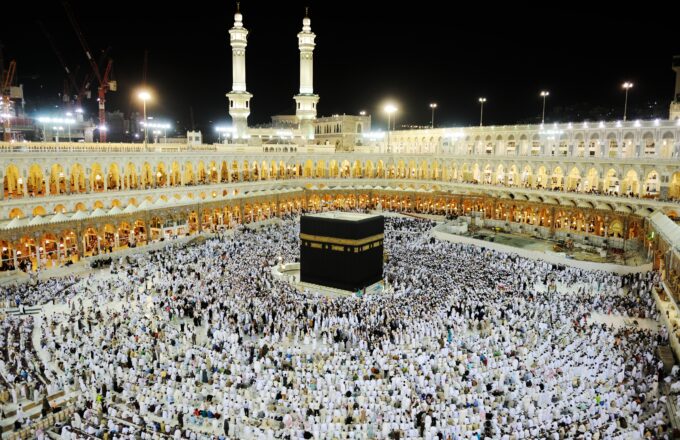
The performance of Hajj represents one of the most significant spiritual milestones in the life of a Muslim. As one of the five pillars of Islam, it is an obligation for every individual who possesses the physical and financial means to undertake the journey to Makkah. However, life does not always follow a linear path. Sickness, old age, or the sudden departure from this world can prevent a believer from fulfilling this sacred duty during their lifetime. Within the framework of Islamic jurisprudence, the concept of Hajj Badal—often referred to as Proxy Hajj—serves as a divine provision, ensuring that a soul’s aspiration to visit the House of Allah is not left unfulfilled.
This comprehensive guide serves as an authoritative resource on the meaning, legal foundations, and logistical realities of Hajj Badal. We will explore the delicate balance between personal obligation and communal support, the importance of intention, and the rigorous requirements placed upon those acting as representatives. Whether you are seeking to fulfill a debt on behalf of deceased parents or assisting an elderly loved one who can no longer travel, this guide provides the necessary clarity to approach this act of worship with precision, reverence, and adherence to the Sunnah.
Understanding the Concept of Hajj Badal (Proxy Hajj)
Defining Hajj Badal and its Significance in Islam
Hajj Badal literally translates to “a replacement Hajj.” In the Islamic context, it refers to the act of one person performing the pilgrimage rituals on behalf of another who is unable to do so personally. The significance of this practice cannot be overstated; it transforms the Hajj from a purely individual act into a profound expression of kinship and stewardship. When a Muslim appoints a representative to perform the rites in Makkah, they are effectively seeking to complete a pillar of Islam that, through divine decree, circumstances prevented them from performing themselves. It is an act that bridges the gap between the living and the hereafter, ensuring that the legacy of a believer’s devotion remains intact.
The Spiritual Philosophy of Stewardship and Kinship
The spiritual flow of Hajj Badal: How a proxy’s physical journey fulfills the religious obligation and transfers the spiritual reward to the unable or deceased.
The philosophy behind Hajj Badal is rooted in the concept of Sadaqah Jariyah (ongoing charity) and the preservation of religious duties. By facilitating this journey, family members demonstrate deep respect for their parents or relatives, treating the deceased’s missed obligation as a “debt to Allah” that must be settled. This stewardship reflects the Islamic ethos of community support, where the burdens of the vulnerable—such as the elderly or the infirm—are carried by those with the capacity to act. It is not merely a legal transaction; it is a spiritual gesture that honors the bond of faith and familial love.
Hajj-e-Badal vs. Umrah Badal: Key Differences
 Key differences between performing Hajj and Umrah by proxy, focusing on the level of religious obligation, timing, and scope of rituals.
It is essential to distinguish between Hajj Badal and Umrah Badal. Hajj is a Fard (obligatory) act of worship defined by specific rituals at specific times (the days of Dhul-Hijjah). Umrah, while highly encouraged, is not a mandatory pillar in the same capacity as Hajj. Therefore, Hajj Badal is strictly regulated by the requirement that the person for whom the Hajj is being performed must have been physically or financially incapable at the time of their passing or their incapacity. Umrah, conversely, can be performed as a voluntary act of devotion for someone else regardless of their physical state, but Hajj Badal carries the weight of fulfilling a fundamental mandate of the Shariah.
The Shariah Foundation: Evidence from the Quran and Sunnah
Scriptural Basis: Lessons from Sahih al-Bukhari and Sahih Muslim
The legitimacy of Proxy Hajj is firmly established in the traditions of the Prophet Muhammad (peace be upon him). Scholarly consensus rests upon narrations found in both Sahih al-Bukhari and Sahih Muslim. These texts provide the legal precedent that acts of worship can be delegated if the original performer is unable to execute them due to legitimate, Islamically recognized obstacles. By studying these Hadith, we move beyond mere opinion and ground our practice in the authentic teachings of the Prophet, ensuring that the ritual performed is valid and accepted by Allah.
The Hadith of Ibn Abbas: Precedent for Performing Hajj for Parents
One of the most frequently cited accounts involves a woman from the tribe of Juhaynah who approached the Prophet (peace be upon him) asking, “My mother had vowed to perform Hajj, but she died before she could do so. Should I perform Hajj on her behalf?” The Prophet replied, “Yes, perform Hajj on her behalf. Do you not think that if your mother owed a debt, you would pay it off? So, pay off the debt to Allah, for Allah is more deserving that debts owed to Him should be paid” (Sahih al-Bukhari). This interaction serves as the cornerstone for the concept of the “debt to Allah,” confirming that a daughter may act as a representative for her parent.
Understanding Hajj as a “Debt to Allah” (Faraid)
In Islamic jurisprudence, once the conditions for Hajj are met—specifically, the availability of financial means and physical health—the obligation becomes a binding debt. If a person fails to perform it, that debt remains on their record. Hajj Badal is the mechanism for discharging this liability. Recognizing Hajj as a debt changes the perspective from a “charitable option” to an “essential responsibility.” For the heirs of a deceased person, ensuring that this debt is settled is an act of filial piety that mirrors the settling of financial liabilities to creditors.
Eligibility Criteria: Who Can Receive a Proxy Hajj?
Performing Hajj on Behalf of the Deceased Person
For a deceased person, the requirement is that they had the financial capacity (Istita’ah) to perform Hajj during their lifetime but failed to do so before their death. If they lacked the wealth or the health, the obligation was never technically established upon them. However, if they were wealthy but delayed the journey, the obligation remains. In such cases, heirs or designated proxies must perform the Hajj using funds from the deceased’s estate, prioritizing this over the distribution of inheritance.
The “Ma’dhub”: Hajj for the Elderly and Chronically Ill
The term Ma’dhub refers to one who is physically incapacitated. This includes the elderly who lack the stamina for the grueling nature of the Hajj rites, or those suffering from chronic illnesses that make travel impossible. If a person is deemed physically unable to perform the Hajj, yet they possess the wealth to pay for someone else to go, they are permitted to appoint a proxy. The proxy acts as their “hands and feet” in Makkah. It is crucial to note that if the individual recovers their health, the duty to perform Hajj again in person may be reinstated, depending on the school of thought.
Financial Requirements: Wealth, Debt, and the Islamic Will (Bequests)
The financial aspect of Hajj Badal is strictly governed by the rules of inheritance. If the deceased left a will, the expenses for the proxy Hajj are taken from the one-third portion of the estate designated for bequests. If no will was left, the heirs may collectively agree to fund the Hajj from the estate before any inheritance is distributed. Using personal funds to sponsor a parent’s Hajj is also a noble act, but one must ensure the arrangement respects the sanctity of the intention. It is not “buying” a Hajj; it is providing the necessary support for a representative to facilitate the journey.
Fulfilling a Nazar: Proxy Hajj for Unmet Vows
If a person made a Nazar (a solemn vow) to perform Hajj and died before fulfilling it, the obligation is absolute. This is considered a binding covenant with the Creator. In such instances, the Hajj must be performed on their behalf, regardless of whether they had the financial means to do so originally, because the vow itself created the obligation. The proxy must be informed clearly that the Hajj is being performed to satisfy a specific Nazar.
Qualifications of the Proxy (The Ma’moor)
Does the Proxy Need to Have Performed Their Own Fard Hajj First?
A critical condition for any representative (the Ma’moor) is that they must have already performed their own obligatory Hajj (Hajj-e-Fard). The reasoning is logical: one cannot provide what one has not yet received. By performing their own Hajj first, the proxy gains the necessary experience and demonstrates the physical capacity to handle the rigors of the journey. This requirement ensures that the proxy is not only physically capable but also spiritually prepared to shoulder the responsibility of another person’s soul.
Character and Trustworthiness: The Role of the Wakil (Representative)
The Wakil (representative) must be a person of upright character and deep religious understanding. Because the person commissioning the Hajj cannot personally oversee the rituals, they must rely on the honesty of the proxy. A trustworthy proxy will strictly adhere to the Sunnah, perform the rites with the correct intentions, and provide transparent updates to the requester. When selecting a proxy, look for individuals who are not only knowledgeable about the Manasik (rituals) but who also exhibit the patience required for a journey in the intense heat of Makkah.
Can a Woman Perform Hajj Badal for a Man (and Vice Versa)?
The gender of the proxy is generally flexible in Islamic jurisprudence, provided the proxy is an adult and meets all other requirements. A woman can perform Hajj on behalf of a man, and a man can perform Hajj on behalf of a woman. The focus is on the capability to perform the rites according to the Shariah. However, for a woman, the logistical requirement of having a Mahram (a male guardian) for travel must be considered in accordance with local regulations and the specific school of thought the family follows.
Jurisprudential Nuances: Perspectives from the Four Schools of Thought
The Hanafi and Hanbali View: Conditions for Validity
The Hanafi and Hanbali schools emphasize that Hajj Badal is permissible only for those who are physically or financially unable to do so themselves. They strictly require that the proxy must be someone who has already performed their own Hajj. These schools emphasize the importance of the Niyyah (intention) being specifically directed toward the person being represented. If the proxy performs the Hajj for themselves or performs it incorrectly, the obligation of the requester remains unfulfilled.
The Shafi’i and Maliki Perspectives on Proxy Pilgrimage
The Shafi’i and Maliki schools share the primary requirement of incapacity for the requester but offer slight variations in the prioritization of who should act as the proxy. Generally, they advocate that the closest family member or a person recommended by the family should be the first choice. They emphasize the importance of the “transfer” of the obligation, ensuring that the proxy does not deviate from the essential Arkan (pillars) of the Hajj. Their rulings provide a roadmap for navigating situations where family members may be unavailable to perform the task themselves.
Notable Fataawa: Modern Interpretations by Shaykh Ibn Baaz and Other Scholars
Modern scholars, such as the late Shaykh Ibn Baaz, have provided significant clarity regarding the logistics of modern-day Hajj. Their rulings emphasize that one should not turn Hajj Badal into a commercialized industry. They caution against “cheap” services that prioritize profit over the sanctity of the rituals. Contemporary Fataawa also address the use of modern technology—such as the Nusuk platform for permits—stating that legal compliance with Saudi regulations is part of the religious obligation to perform the Hajj correctly and safely.
Step-by-Step Rituals: How the Proxy Performs the Journey
The Importance of Niyyah (Intention) for the Aamir (The Requester)
The process begins with the Aamir (the requester) making a sincere intention. This intention should be established before the proxy departs. The proxy must also make a clear intention at the time of entering Ihram, explicitly stating: “O Allah, I am performing this Hajj on behalf of [Name of the Deceased/Incapacitated Person].” This verbal declaration ties the action to the individual for whom the journey is undertaken.
Navigating the Miqats and Entering the State of Ihram
The proxy must enter the state of Ihram at the appropriate Miqat. From this moment, all rules of Ihram—such as the prohibition of cutting hair or nails, wearing tailored clothing (for men), and using perfumes—apply to the proxy. The proxy should maintain this state with the same level of caution as if they were performing the Hajj for themselves. The transition into Ihram marks the commencement of the sacred journey, and the proxy must maintain constant remembrance of Allah throughout.
Performing the Core Rituals: Tawaf, Sa’i, and Wuquf at Arafat
The proxy must ensure the proper sequence of rituals: Tawaf al-Ifadah, Sa’i between Safa and Marwah, and the essential Wuquf (standing) at Arafat. The day of Arafat is the climax of the Hajj, and it is here that the proxy must focus intently on supplication on behalf of the person they represent. Any deviation or error in these core pillars could invalidate the entire Hajj, which is why hiring a knowledgeable representative is paramount.
Completing the Rites: Muzdalifah, Jamarat, and Qurbani (Sacrifice)
Following Arafat, the proxy proceeds to Muzdalifah and then to the Jamarat for the stoning ritual. The Qurbani (animal sacrifice) is a mandatory component for Hajj Tamattu or Qiran. The proxy must ensure that the animal is slaughtered in accordance with Islamic law during the specified days of Tashreeq. This sacrifice serves as a symbolic offering for the person being represented, further cementing the “debt-clearing” nature of the journey.
Tawaf al-Ifadah and Tawaf al-Wada (The Farewell Circumambulation)
The journey concludes with the Tawaf al-Ifadah and the Tawaf al-Wada (Farewell Tawaf). The proxy must ensure that every circumambulation is performed with focus and dedication. Once these final rites are completed, the proxy effectively concludes the obligations of the Hajj on behalf of the requester. It is standard practice for the proxy to provide documentation or confirmation of these rites to the requester upon their return.
Choosing the Right Type of Hajj for Proxy Services
Hajj al-Tamattu: The Preferred Choice for Many Proxy Services
For many scholars and Hajj agencies, Hajj al-Tamattu is often considered the most suitable option for Hajj Badal (proxy Hajj) because it offers greater flexibility and ease for the pilgrim performing Hajj on behalf of another person.
With Hajj al-Tamattu:
- The performer completes Umrah first, exits the state of Ihram, and later enters Ihram again for Hajj.
- This break between Umrah and Hajj makes the journey physically easier compared to other Hajj types.
- It is especially practical for elderly pilgrims, those with health limitations, or proxy pilgrims handling multiple responsibilities during the Hajj season.
- Many international pilgrims also choose Tamattu because it is widely organized and supported by Hajj operators.
Another reason is that Hajj al-Tamattu is specifically recommended for pilgrims traveling from outside Saudi Arabia in many scholarly opinions, making it a common and trusted choice for Hajj Badal services.
Final Thoughts
The performance of Hajj Badal is a profound act of love, responsibility, and spiritual continuity. It serves as a bridge, allowing the living to fulfill the deepest, most sacred desires of those who have departed or who are no longer able to complete the journey themselves. By viewing this act not as a mere ritual but as a “debt to Allah,” we elevate the importance of careful planning, correct intention, and the selection of trustworthy, knowledgeable representatives.
To ensure your experience with Hajj Badal is spiritually fulfilling and legally compliant, keep these final takeaways in mind:
- Prioritize Integrity: Always conduct due diligence when selecting a representative. Ensure they are well-versed in the Manasik of Hajj and are committed to performing the rites exactly as prescribed.
- Verify Compliance: With the introduction of the Nusuk platform and strictly regulated Hajj permits, ensure that your proxy has secured all necessary legal permissions. Operating outside of these regulations risks the validity of the Hajj and causes unnecessary difficulty for the representative.
- Maintain Transparency: Ensure there is clear communication regarding the specific type of Hajj to be performed and the intent behind the service. Professional services should offer documentation that provides peace of mind to the family.
- The Spirit of the Act: Remember that the value of Hajj Badal lies in the connection between the proxy, the requester, and the Creator. It is an act of Sadaqah Jariyah that benefits the soul of the recipient while bringing immense reward to those who facilitate the journey.
As you look toward arranging a Proxy Hajj, treat the process with the same level of care you would apply to your own pilgrimage. By adhering to the guidelines set forth by the Shariah and ensuring that every logistical step is grounded in transparency and piety, you fulfill a noble obligation. May Allah accept this effort from both the proxy and the one on whose behalf it is performed, and may it be a source of immense light and forgiveness for the soul who could not reach the House of Allah in person. The journey to Makkah is a life-altering experience; facilitating that journey for another is a testament to the enduring power of faith and the strength of the Muslim community.