
Essential Guide to Dam Penalties in Hajj and Umrah
Performing Hajj or Umrah is a profoundly spiritual experience that requires meticulous attention to Islamic rituals and Ihram restrictions, but human errors inevitably occur. When pilgrims make mistakes, miss obligatory acts, or violate Ihram rules, Islamic jurisprudence mandates specific forms of expiation known as dam to purify the pilgrimage. Understanding these specific dam-scenarios ensures you remain spiritually accountable and practically prepared for any misstep. This comprehensive guide provides essential dam-guidance, outlining exactly when-dam-is-required, the scriptural basis for these penalties, and the strict responsibilities performers hold when executing the sacrifice. By studying how compensation-for-errors is structured, you will gain clarity on how dam-payment-explained by scholars translates to modern pilgrimage practices, allowing you to complete your sacred journey with confidence and peace of mind.
Understanding the Concept of Dam in Islamic Pilgrimage
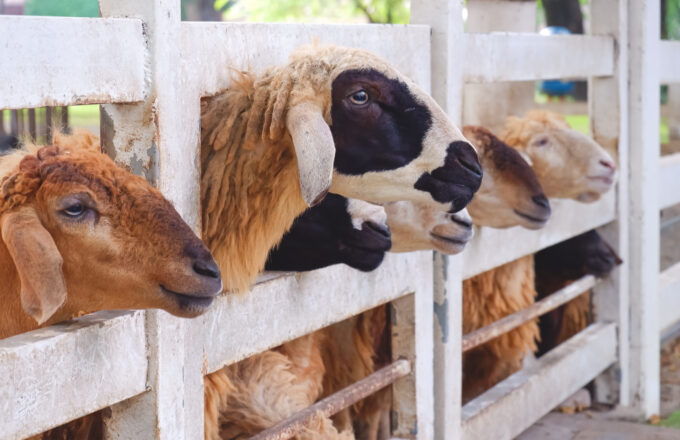
The Arabic word “dam” literally translates to “blood.” In the context of Islamic pilgrimage, it refers to the mandatory animal sacrifice required to atone for specific violations or omissions during Hajj and Umrah. This penalty is not designed to punish pilgrims maliciously. Instead, it serves as a merciful mechanism to correct unintentional errors and preserve the validity of the worship.
When a pilgrim crosses certain boundaries established by Islamic law, they must offer compensation. Depending on the severity of the infraction, this compensation-for-errors falls into a few distinct categories. The heaviest penalty is a Badanah, which requires sacrificing a large animal like a camel or cow. The standard Dam involves sacrificing a smaller animal, such as a sheep or goat. For minor infractions, the penalty might drop to Sadaqah, which involves giving a specific amount of food or charity to the poor.
To navigate these rules successfully, pilgrims must maintain a high level of situational awareness. The transition into the state of Ihram fundamentally changes everyday permissions. Actions that are entirely lawful on a normal Tuesday become strictly forbidden during the pilgrimage. Recognizing exactly when-dam-is-required allows pilgrims to react swiftly, perform the necessary expiation, and move forward with their spiritual duties without lingering doubt.
Core Dam-Scenarios and Common Ihram Violations
Entering Ihram places the pilgrim in a state of consecration. Violating the specific restrictions attached to this state represents the most common reason pilgrims must pay a penalty. Scholars have meticulously categorized these dam-scenarios to help individuals assess their mistakes.
Navigating Clothing and Grooming Restrictions
One of the most frequent areas of confusion involves clothing and grooming. Men entering Ihram must wear two unstitched white sheets. Wearing stitched clothing—such as shirts, trousers, or fitted underwear—for 12 hours or more mandates a full dam. If the stitched clothing is worn for a shorter duration, the penalty is reduced to Sadaqah. Similarly, men are forbidden from covering their heads with caps or turbans, while women must not cover their faces with a niqab that touches the skin. Doing so for an extended period triggers the same penalty tier.
Grooming restrictions are equally strict. Pilgrims cannot cut, shave, or pluck hair from any part of their body. Clipping nails is also prohibited. If a pilgrim shaves one-quarter or more of their head or beard, a dam is required. Trimming a smaller amount necessitates Sadaqah. For nails, clipping the nails of a full hand or foot demands an animal sacrifice, whereas cutting fewer than four nails requires a smaller charitable donation per nail.
Scent, Perfume, and Hunting Penalties
Fragrance is strictly prohibited once the intention (niyyah) for Ihram is made. Applying perfume to the body or clothing, using scented soaps, or wiping the skin with scented tissues are common modern pitfalls. If a pilgrim applies fragrance to a wide area of the body, such as an entire arm or leg, they must sacrifice an animal. If the application is isolated to a small spot, a charitable donation suffices.
Hunting poses another strict prohibition. A pilgrim in Ihram cannot hunt any land animal, nor can they assist someone else in the act. Doing so requires the pilgrim to sacrifice an equivalent animal, distribute food to the poor, or undertake a period of fasting. Uprooting vegetation within the Haram boundaries also violates the sanctity of the holy city and requires an assessed financial penalty.
Intimacy Boundaries and Severe Expiations
Intimate relations during the pilgrimage carry the most severe consequences. Engaging in sexual intercourse before standing at Arafat completely nullifies the Hajj. In this devastating scenario, the pilgrim must offer a Badanah (a large animal sacrifice), complete the remaining rituals despite the nullification, and repeat the entire Hajj in a subsequent year. If the intimacy occurs after Arafat but before Tawaf al-Ziyarah, the Hajj remains valid, but a dam is required. During Umrah, relations before completing the Sa’i will nullify the journey, requiring both a major sacrifice and a repetition of the Umrah.
Ritual Omissions That Trigger Dam Requirements
Beyond active violations of Ihram, failing to perform obligatory (Wajib) acts also demands expiation. Hajj and Umrah consist of pillars (Arkan), which cannot be compensated for if missed, and obligatory acts (Wajibat), which can be remedied through sacrifice.
Miqat and Tawaf Compliance
The Miqat is the designated geographical boundary where pilgrims must enter Ihram. Crossing this boundary without the proper intention and attire is a significant error. If a pilgrim passes the Miqat without Ihram, they must offer a sacrifice, unless they physically return to the boundary to initiate their state of consecration properly.
During the Tawaf (circumambulation of the Kaaba), purity is paramount. Performing the Tawaf without Wudhu (ablution) or while in a state of major ritual impurity requires a dam. Omitting four or more circuits of the Tawaf al-Ziyarah or the Farewell Tawaf also mandates an animal sacrifice.
Rami, Muzdalifah, and Mina Obligations
The specific rituals of Hajj present numerous opportunities for procedural errors. Rami, the act of pelting the Jamarat (stone pillars) with pebbles, must be performed on specific days. Missing the pelting entirely on any given day, throwing the stones in the wrong sequence, or using items other than actual pebbles requires a dam.
Additionally, pilgrims must spend specific nights in designated locations. Failing to stay overnight in Muzdalifah without a valid medical or logistical excuse triggers a penalty. Similarly, missing multiple nights in the tent city of Mina during the days of Tashreeq necessitates an animal sacrifice.
Scriptural Guidance: What the Quran and Hadith Say
The rules governing these expiations are not arbitrary; they are deeply rooted in primary Islamic texts. The Quran explicitly outlines the framework for compensation when a pilgrim faces physical barriers or health crises.
In Surah Al-Baqarah, Allah establishes the foundational rule for those prevented from completing their rites:
“And complete the Hajj and Umrah for Allah. But if you are prevented, then offer what can be obtained with ease of sacrificial animals…” (Quran 2:196).
The same verse continues by addressing medical necessities that force a pilgrim to violate an Ihram restriction, such as shaving the head due to a scalp condition:
“And whoever among you is ill or has an ailment of the head [making shaving necessary must offer] a ransom of fasting [three days] or charity or sacrifice.” (Quran 2:196).
This specific directive is further clarified in the Sunnah. According to a prominent narration recorded in Sahih Bukhari, a companion named Ka’b ibn ‘Ujrah was suffering from a severe lice infestation on his head while in Ihram. The Prophet Muhammad (peace be upon him) saw his distress and told him to shave his head, instructing him to expiate the act by sacrificing a sheep, fasting for three days, or feeding six poor people. This Hadith forms the bedrock of modern dam-guidance for health-related Ihram violations.
Performer Responsibilities and Execution Guidelines
When a pilgrim realizes they owe a penalty, they assume specific logistical and religious responsibilities to ensure the dam-payment-explained by scholars is executed correctly. The process cannot be handled casually or delayed indefinitely.
Location and Distribution Rules
A fundamental rule of offering a dam is spatial restriction. The animal sacrifice must take place within the Haram boundaries of Makkah. You cannot return to your home country and slaughter a sheep there to compensate for an Umrah mistake. If a pilgrim leaves Saudi Arabia before realizing their error, they must appoint a trustworthy representative or service inside Makkah to facilitate the slaughter on their behalf.
Furthermore, the distribution of the meat is strictly regulated. The meat from a compensatory sacrifice belongs exclusively to the poor and needy residents within the Haram. The pilgrim who committed the error is strictly prohibited from consuming any portion of the meat.
Navigating Proxy Hajj (Hajj Badal) Accountability
Unique scenarios arise when an individual performs Hajj on behalf of someone else—a practice known as Hajj Badal. This proxy pilgrimage is reserved for individuals fulfilling the duty for deceased relatives or those with permanent physical incapacities.
When a proxy performer assumes this heavy trust (Amanah), they also assume the liability for ritual mistakes. Dedicated practitioners of Hajj Badal emphasize personal accountability. If the proxy commits an Ihram violation or misses a Wajib act due to their own negligence or forgetfulness, they are personally responsible for funding and executing the resulting dam. The cost of the penalty cannot be passed back to the family who commissioned the proxy, ensuring the financial and spiritual burden rests on the one actively performing the rites.
The Scale of Modern Dam Expiation
To understand the sheer volume of these expiations, one only needs to look at the logistical infrastructure Saudi Arabia has built to handle them. The Kingdom established the Adahi project (officially the Saudi Project for Utilization of Hajj Meat) to manage sacrifices safely, hygienically, and in accordance with Shariah law.
Recent data highlights the massive scale of this operation. According to an official report covered by Arab News, the Adahi project processed over 287,000 sacrifices during a recent Hajj season. Following the main Eid day, the organization distributed more than 84,000 kilograms of meat (equivalent to over 7,000 sheep) directly to deserving beneficiaries. Pilgrims increasingly rely on authorized systems like Adahi to ensure their penalties are handled securely, mitigating the risk of fraudulent street vendors who sometimes operate around the holy sites.
Frequently Asked Questions (FAQ)
Can I pay cash directly to a charity instead of sacrificing an animal?
No. If the specific violation mandates a dam (animal sacrifice), you cannot substitute it by simply donating equivalent cash to a charity. You must purchase the animal or use a trusted proxy service (like the Adahi project) to perform the physical slaughter within the Makkah boundaries on your behalf. Cash is only acceptable if you use it to appoint an agent to buy and sacrifice the animal.
What happens if I make a mistake out of genuine ignorance?
Islamic scholars maintain nuanced views on ignorance. While Allah is the Most Forgiving, many procedural mistakes in Hajj and Umrah still require expiation even if done unintentionally or out of forgetfulness. The penalty serves to mend the deficiency in the ritual. As soon as you realize the error, you must stop the forbidden action immediately and consult a scholar to determine the required compensation.
Does every single mistake require an animal sacrifice?
Not every error demands an animal sacrifice. Minor infractions—such as trimming a single nail, wearing stitched clothing for an hour, or applying a tiny drop of scent—often fall under the category of Sadaqah. This requires feeding the poor rather than slaughtering livestock.
How quickly must the dam be paid?
It is highly recommended to fulfill the obligation as soon as reasonably possible while you are still in Makkah. Unnecessary delays are discouraged. If you depart Saudi Arabia before executing the sacrifice, the obligation remains attached to you, and you must arrange for someone in Makkah to perform it promptly.
Safeguarding Your Spiritual Journey
Navigating the complexities of Islamic pilgrimage requires deep preparation and a sincere heart. While the myriad rules surrounding Ihram and ritual obligations might seem overwhelming, the system of dam exists as a profound mercy. It provides a clear, structured pathway for redemption, ensuring that human fragility does not permanently void a journey of a lifetime.
By familiarizing yourself with these common scenarios and understanding your responsibilities, you protect the sanctity of your worship. Prioritize studying the rites thoroughly before you travel, consult qualified scholars when doubts arise, and approach your pilgrimage with mindful intention.