
Can You Use Zakat for Hajj Badal? An Islamic Guide
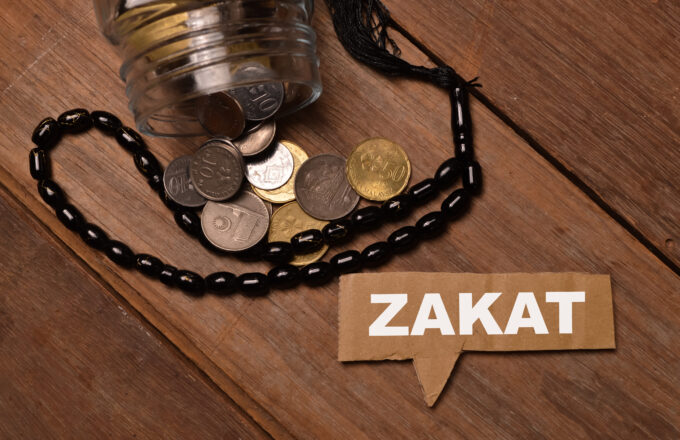
Quick answer: You generally cannot use Zakat for Hajj Badal directly, because Zakat requires tamleek—transferring ownership to an eligible poor person. However, if you give Zakat to an eligible poor recipient and they freely choose to use it for Hajj or to commission a Hajj Badal, that is permissible. Funding a proxy Hajj on behalf of a deceased relative from Zakat is not valid.
Few financial questions in Islam carry as much spiritual weight as how we use our Zakat, and few acts of devotion match the significance of fulfilling someone’s Hajj through Hajj Badal—so it’s natural to wonder whether the two can be combined, especially when a loved one passes away without completing their pilgrimage or a family member is permanently unable to travel. The short version is that the relationship between Zakat and Hajj Badal is more nuanced than many assume, hinging on a single, crucial principle of Islamic law. This guide breaks down what Zakat is, when Hajj Badal is permitted, what scholars say about funding one with the other, and how to make sure your worship is both valid and accepted.
What is Zakat? Purpose, eligibility, and distribution
Zakat is the third pillar of Islam—an obligatory annual charity paid by Muslims whose wealth exceeds the nisab threshold. The standard rate is 2.5% of qualifying savings held for one lunar year. It is not a voluntary donation; it is a right that the poor have over the wealth of the rich.
The Quran is explicit about who may receive Zakat. Allah names eight categories of recipients:
“Zakah expenditures are only for the poor and for the needy and for those employed to collect [zakah] and for bringing hearts together [for Islam] and for freeing captives [or slaves] and for those in debt and for the cause of Allah and for the [stranded] traveler—an obligation [imposed] by Allah. And Allah is Knowing and Wise.”
— Surah At-Tawbah 9:60 (Quran.com)
These eight categories—the poor (fuqara), the needy (masakin), Zakat administrators, new Muslims, captives, debtors, those striving in Allah’s cause (fi sabilillah), and stranded travelers—form the complete list of valid uses. Anything outside these categories falls outside the bounds of Zakat.
One principle dominates how Zakat must be distributed: tamleek, meaning full transfer of ownership. According to the Hanafi scholars at IslamQA.org, “If the person is eligible to accept Zakat, then it (Zakat) may be given to him as an outright ownership. He may do whatever he wants to with it.” This single rule is the key to understanding everything that follows.
What is Hajj Badal, and when is it permissible?
Hajj Badal, also called proxy Hajj, is performing the pilgrimage to Mecca on behalf of someone else. It is reserved for two specific situations:
- A deceased person who was obligated to perform Hajj but died before doing so.
- A living person who is permanently unable to travel due to chronic illness, severe disability, or extreme old age, with no realistic hope of recovery.
The permissibility of Hajj Badal is firmly established in the Sunnah. The most cited evidence comes from an authentic Hadith:
A woman asked, “O Messenger of Allah, my mother has died, and she had vowed to perform Hajj but she did not perform it before she died. Can I perform Hajj on her behalf?” He said: “Yes, perform Hajj on her behalf. Do you not think that if your mother owed a debt you would pay it off? Pay off the debt owed to Allah, for Allah is more deserving that what is owed to Him should be paid.”
— Sahih al-Bukhari 1852 (Sunnah.com)
The proxy must meet clear conditions: they must have already completed their own obligatory Hajj, be a sane adult Muslim, make a sincere intention on behalf of the specific individual, and perform Hajj for only one person per season. There are no restrictions of gender or bloodline—a man may perform it for a woman, a friend for a friend.
For the living, an additional rule applies. As IslamQA.info explains, a living person who is permanently incapacitated may appoint a proxy, but they must give explicit authorization and, crucially, must finance the journey themselves if they have the wealth to do so.
Can you use Zakat for Hajj Badal? What scholars say
Here’s where the tamleek principle becomes decisive. Hajj Badal itself is not a person—it’s an act of worship. Zakat cannot be spent on an act; it must be transferred into the ownership of an eligible human recipient. For this reason, paying a Hajj Badal provider directly from your Zakat fund is generally not valid, because no eligible poor person ever takes ownership of the money.
The reasoning is straightforward when you consider intention. If you fund a Hajj Badal for your deceased father using Zakat, the money goes toward a religious service, not into the hands of one of the eight categories named in Surah At-Tawbah. The Zakat obligation is therefore not discharged.
However, there is a permissible path that often gets confused with the impermissible one. The Hanafi position, reflected across multiple rulings on IslamQA.org, works like this:
- You give your Zakat to an eligible poor person and transfer full ownership.
- That money now belongs entirely to them.
- If they then freely choose to use it for Hajj—or to commission a Hajj Badal for a relative—that is their decision to make.
In this scenario, your Zakat is valid because ownership transferred correctly. What the recipient does afterward is up to them. The distinction is not what the money buys, but who owns it at the moment your Zakat obligation is fulfilled.
It’s worth noting that Hajj is not obligatory on someone poor enough to receive Zakat in the first place. Hajj becomes fard only on those who can afford the journey beyond their basic needs. So giving Zakat specifically to enable a poor person’s own Hajj, while permissible as a transfer, does not create an obligation that wasn’t there.
Conditions and exceptions: specific scenarios explained
Different situations call for different rulings. Here’s how the principles apply in practice:
Choose to give Zakat to a poor relative who then funds a Hajj Badal if you want your charity to reach a needy family member who is independently arranging pilgrimage matters. Valid—because ownership transfers first.
Do not pay a Hajj Badal service directly from Zakat if your goal is to fulfill the Hajj of a deceased parent. The expense should come from the deceased’s estate or from your own non-Zakat wealth (sadaqah or personal funds).
The “fi sabilillah” category is sometimes raised as a justification. Some contemporary scholars interpret “the cause of Allah” broadly, but the majority of classical scholars restrict it to those engaged in jihad or, by extension, students of sacred knowledge and stranded travelers. Most jurists do not extend it to financing Hajj or Hajj Badal. If you wish to rely on a broader interpretation, consult a qualified scholar from your madhhab directly.
For a living, permanently incapacitated person who has wealth, the cost of their Hajj Badal must come from their own funds—not from Zakat collected on their behalf.
Why sincerity and eligibility matter most
The Prophet Muhammad (peace be upon him) said:
“Actions are but by intention, and every man shall have only that which he intended.”
— Sahih al-Bukhari 1 (Sunnah.com)
Hajj Badal is an amanah—a sacred trust. The reward for the pilgrimage is credited to the soul of the deceased or incapacitated individual, while the proxy earns reward for their service. None of that spiritual benefit is realized if the worship is built on an invalid foundation. Using Zakat incorrectly doesn’t just fail to fulfill your Zakat obligation—it can leave both the charity and the pilgrimage in question.
This is why eligibility runs in two directions. The Zakat recipient must qualify under one of the eight categories, and the person performing Hajj Badal must qualify by having completed their own Fard Hajj. Cutting corners on either side undermines the entire act.
Practical considerations for a valid Hajj Badal
To keep your worship sound, keep these steps in mind:
- Separate your funds. Pay Hajj Badal from the deceased’s estate, your personal savings, or sadaqah—not from your designated Zakat.
- Verify the proxy’s eligibility. Confirm they have completed their own obligatory Hajj and are physically capable of the rituals.
- Insist on a clear intention. The niyyah must name the specific person the Hajj is performed for.
- Confirm one person per season. A single proxy cannot perform Hajj for multiple people in the same year.
- Account for Qurbani and Dam. Make sure required sacrifices and any penalty payments are covered and clearly agreed upon.
- Document the arrangement. Mutual trust and transparency protect both parties in what is, at its heart, an act of worship.
When in doubt about your specific financial situation, ask a knowledgeable scholar. Rulings can shift slightly between schools of thought, and a brief consultation can save you from an invalid act.
How YourHajjBadal.com facilitates a sincere proxy Hajj
For families seeking a trustworthy way to fulfill a loved one’s Hajj, YourHajjBadal.com offers a personal alternative to high-volume agencies. The service is run by a single individual—a 32-year-old Muslim graduate of the University of Rajshahi who completed his own Fard Hajj in 2025, making him Islamically eligible to perform Hajj Badal for others.
Several features reflect the eligibility and sincerity principles discussed above:
- One slot per year, so the amanah receives full focus rather than being treated as a volume business.
- Hajj al-Tamattu performed personally, with Qurbani fully included and no hidden costs.
- Identity and eligibility verification, including a willingness to privately share the 2025 Hajj visa and Nusuk ID for serious clients.
- A personal “Dam” guarantee, meaning any required penalty from an unintentional mistake is covered by the proxy himself.
- Direct communication and journey updates through messages, photos, and video calls where possible.
Because of the tamleek rule, the registration fee (US$250) and remaining balance (approximately US$5,500) should be paid from your personal funds, sadaqah, or the deceased’s estate—not from your Zakat.
Honoring both pillars the right way
Zakat and Hajj Badal are two profound pillars of devotion, but they follow different rules. Zakat demands ownership transfer to an eligible recipient; Hajj Badal demands a qualified proxy and a sincere intention. The cleanest approach is to keep them separate—fund your Hajj Badal from personal wealth or the deceased’s estate, and let your Zakat reach the poor as Allah intended. If you wish to combine them, the only valid route is to give Zakat to an eligible person who then decides, of their own accord, how to spend it.
Before finalizing any arrangement, speak with a qualified scholar about your circumstances, then choose a proxy whose eligibility and sincerity you can verify. Done correctly, you fulfill two acts of worship at once—and honor a loved one in a way that truly counts before Allah.
Frequently asked questions
Can I pay a Hajj Badal company directly with my Zakat?
No. Zakat requires transferring ownership to an eligible poor person (tamleek). Paying a service provider directly means no eligible recipient owns the money, so the Zakat is not valid. Use personal funds, sadaqah, or the deceased’s estate instead.
Can I give Zakat to a poor relative who then uses it for Hajj?
Yes. Once you transfer full ownership of the Zakat to an eligible poor person, the money is theirs. If they choose to use it for their own Hajj or to arrange a Hajj Badal, that is their decision and your Zakat remains valid.
Who should pay for a Hajj Badal for a deceased person?
The cost should ideally come from the deceased’s estate before it is distributed among heirs. If the estate cannot cover it, an heir or relative may pay from their own non-Zakat wealth as an act of charity.
Does “fi sabilillah” (in the cause of Allah) cover Hajj Badal?
Most classical scholars limit this category to those engaged in jihad, and some extend it to students of knowledge or stranded travelers. The majority do not include funding Hajj or Hajj Badal. Consult a scholar from your school of thought before relying on a broader view.
How much does a Hajj Badal typically cost?
Costs vary by provider and year. Listed prices range from around US$1,500 (Hajj Badal.net) to approximately US$5,750 with YourHajjBadal.com and £2,620 with the Teebah Foundation for 2026. Always confirm what’s included, such as Qurbani and any required Dam.
Can Hajj Badal be performed for a living person?
Yes, but only if they are permanently unable to travel due to incurable illness, severe disability, or extreme old age. They must explicitly authorize the proxy and, if they have the means, finance the journey from their own wealth.