
Hajj With a Physical Disability: Wheelchair or Proxy?
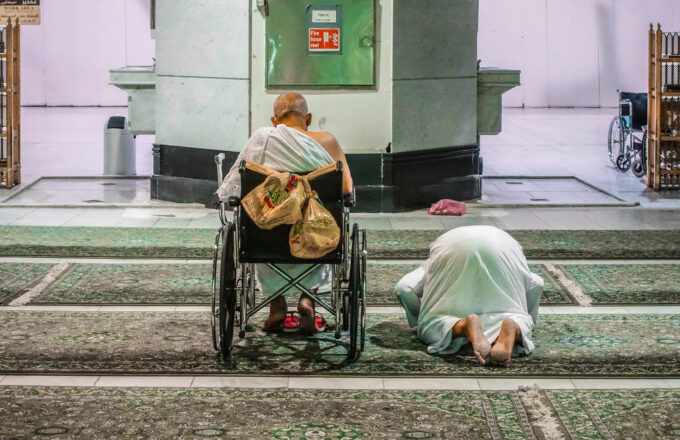
Quick answer: Muslims with physical disabilities have two main paths to Hajj. Those who can travel may perform it personally using wheelchairs and Saudi accessibility services. Those permanently unable due to chronic illness, disability, or old age can choose Hajj Badal—appointing a proxy to perform the pilgrimage on their behalf.
A physical disability does not close the door to Hajj. For many Muslims who use wheelchairs or live with chronic conditions, the question is not whether they can fulfill the fifth pillar of Islam, but how. This post compares two valid routes—performing Hajj in person with wheelchair support, and arranging Hajj Badal (proxy Hajj)—so you can weigh the Islamic rulings, practical realities, costs, and spiritual rewards of each, and decide which option best fits your situation.
Understanding Hajj for Individuals with Disabilities
What does the Quran and Hadith say about disability and Hajj?
Islam ties the obligation of Hajj directly to a person’s ability. Allah says in the Quran:
“And Pilgrimage to the House is a duty that mankind owes to Allah—for those who are able to undertake the journey.” (Surah Al-Imran 3:97)
That phrase—”those who are able”—is the foundation of every concession that follows. When ability is permanently lost, the Sunnah offers a way forward. In a well-known hadith, a woman from the Khath’am tribe asked the Prophet Muhammad (PBUH) about her elderly father who could not sit firmly on a mount. The Prophet (PBUH) confirmed she could perform Hajj for him (Sahih al-Bukhari 1854).
For the deceased, the ruling is equally clear. A woman from Juhaynah asked about her mother who had vowed to perform Hajj but died first. The Prophet (PBUH) replied:
“Yes, perform Hajj on her behalf. Do you not think that if your mother owed a debt you would pay it off? Pay off the debt owed to Allah, for Allah is more deserving that what is owed to Him should be paid.” (Sahih al-Bukhari 1852)
What concessions does Islamic law give disabled pilgrims?
Fiqh scholars across all four Sunni schools recognize practical accommodations. A pilgrim who cannot walk may perform Tawaf and Sa’i in a wheelchair. In the Shafi’i school, performing Sa’i seated is valid when walking is difficult or harmful (Hisar Travel). Where a ritual cannot be completed in the usual way, a substitute act or a dam (compensatory sacrifice) often resolves the shortfall. The principle running through all of these rulings is mercy—Islam does not ask of a person more than they can bear.
Why Hajj matters for everyone
Hajj is the fifth pillar of Islam, a once-in-a-lifetime obligation for every capable adult Muslim. For pilgrims with disabilities, completing it—whether in person or by proxy—carries profound spiritual weight. It fulfills a lifelong duty and, for many, answers a deep emotional longing. As one disabled pilgrim told Arab News after completing the rites, the spiritual impact was “deeply meaningful.”
Hajj Accessibility for Wheelchair Users
What challenges do wheelchair users face during Hajj?
Hajj is physically demanding even for the able-bodied, and the scale is staggering. The 1445H (2024) season drew 1,833,164 pilgrims, according to Saudi Arabia’s General Authority for Statistics (GASTAT). Navigating those crowds in a wheelchair brings specific hurdles:
- Transportation and movement: Getting between hotels, the Grand Mosque, and the holy sites requires accessible vehicles and careful timing to avoid peak congestion.
- Tawaf and Sa’i: Circling the Kaaba seven times and traveling between Safa and Marwah is exhausting on foot and complex on wheels at ground level.
- Mina, Muzdalifah, and Arafat: These sites involve long distances, overnight stays in tents, and the stoning ritual at the Jamarat—each presenting access and stamina challenges.
How has Saudi Arabia improved Hajj accessibility?
Saudi infrastructure for disabled pilgrims has expanded significantly under Vision 2030, which prioritizes inclusivity. Key improvements include:
- Dedicated wheelchair floors: The Grand Mosque offers designated mezzanine levels for performing Tawaf and Sa’i, available in single and double-seater models (imo.im).
- Dedicated passages: The Saudi Ministry of Hajj and Umrah has allocated special passages for elderly and disabled pilgrims inside the Grand Mosque.
- The National Hajj Initiative for Persons with Disabilities: Now in its fifth year, this program served 524 pilgrims with disabilities in 2025 and nearly 2,000 beneficiaries since its launch, offering accessible transportation, specialized accommodation, and 24-hour escort support (Arab News). One participant reported he “did not pay a single riyal” and traveled with only his clothes and wheelchair.
This matters for a real and growing community. Saudi Arabia’s General Authority for Statistics estimated in its 2023 Disability Statistics Publication that about 1.8 percent of the Kingdom’s population lives with some form of disability (via Arab News).
How can wheelchair users prepare for Hajj?
Pre-trip preparation and planning:
- Inform your Hajj operator about your mobility needs early so accessible transport and accommodation can be arranged in advance.
- Consult a doctor about managing your condition across long days and high temperatures.
- Research wheelchair routes at each site before you arrive.
Essential equipment and support:
- You can bring your own wheelchair or borrow one. Free wheelchair points exist near gates like King Abdulaziz Gate and the Safa-Marwah area, and verified pilgrims with disabilities can access them with a companion at no cost (Gkomunika).
- General pilgrims can book electric wheelchairs and carts through the Tanaqol app, or rent electric wheelchairs delivered to their hotel.
- Travel with a reliable companion who can assist through the most demanding rituals.
Hajj Badal: Proxy Hajj Options for the Disabled
When personal travel is not possible, disabled Hajj proxy options offer a religiously sound alternative. Hajj Badal—from the Arabic badal, meaning “substitute”—is the practice of one Muslim performing the pilgrimage on behalf of another.
What are the conditions of Hajj Badal?
For Hajj Badal to be valid, both parties must meet clear criteria.
The person performing it (the proxy) must:
- Be a sane, adult Muslim.
- Have already completed their own obligatory (Fard) Hajj. This condition comes from the Hadith of Shubrumah, where the Prophet (PBUH) told a man to perform his own Hajj first (Sunan Abi Dawud).
- Be physically and mentally capable of completing all rites.
- Make a clear intention (niyyah) for the specific person they represent.
- Perform Hajj for only one person per season.
The person having it performed (the recipient) must:
- Be deceased, or permanently unable to travel due to chronic incurable illness, severe disability, or extreme old age.
- Have been financially able to perform Hajj if alive and wealthy enough to fund the proxy.
- Give explicit authorization if living.
When is Hajj Badal the right choice?
Hajj Badal is suitable in three situations:
- Chronic illness and permanent disability: Choose Hajj Badal if your condition is incurable and genuinely prevents the rigorous physical rituals—not if you are temporarily unwell and likely to recover.
- Elderly and frail individuals: It fits those too weak to safely make the journey, with no realistic hope of regaining strength.
- Deceased individuals: Heirs can—and in some schools should—arrange Hajj Badal from the deceased’s estate to settle this debt to Allah.
How do you choose a trustworthy Hajj Badal service?
The proxy carries an amanah—a sacred trust—so choose carefully:
- Personal connection and sincerity: Look for someone who treats your loved one’s Hajj as an act of worship, not a transaction.
- Transparency: A trustworthy proxy will verify eligibility and share proof, such as their own completed Hajj documentation. For example, Your Hajj Badal offers to share its Fard Hajj visa and Nusuk ID for verification.
- Single focus: Since a proxy may only represent one person per season, services that accept just one individual per year—rather than mass-booking—can devote full attention to that responsibility.
Wheelchair Hajj vs. Hajj Badal: A Direct Comparison
Factor | Wheelchair Hajj (in person) | Hajj Badal (proxy) |
|---|---|---|
Experience | You witness and feel the pilgrimage firsthand | A proxy fulfills it on your behalf |
Eligibility | For those who can travel with support | Only for the permanently incapacitated or deceased |
Spiritual reward | Full personal reward of performing Hajj | Reward credited to the recipient; proxy also rewarded |
Cost | Travel, accommodation, accessibility services | A single proxy fee (often around US$5,500–$5,750) |
Logistics | High—visas, travel, physical stamina required | Lower—handled by the proxy |
Personal experience versus proxy fulfillment
The deepest difference is presence. Performing Hajj yourself, even in a wheelchair, means standing on Arafat and circling the Kaaba with your own eyes and heart. Hajj Badal fulfills the obligation but transfers the physical journey to another. For someone who can travel with support, the personal route offers an irreplaceable experience.
Spiritual reward and intention
Both paths are spiritually valid. In Hajj Badal, the primary merit goes to the recipient, while the proxy earns reward for their service. Intention matters in both cases—performed sincerely for Allah, neither is “lesser” before Him.
Financial and logistical considerations
In-person Hajj carries travel, lodging, and accessibility costs, plus the physical demands of the journey. Hajj Badal involves a single fee and minimal logistics. Some services, such as Your Hajj Badal, include the required Qurbani and personally cover any dam arising from the proxy’s mistake—removing hidden costs.
The Future of Accessible Hajj
Saudi Arabia’s commitment to inclusive pilgrimage continues to grow. The National Hajj Initiative for Persons with Disabilities now covers all 13 regions of the Kingdom and is built on collaboration between Public Security, the Ministry of Health, and the Ministry of Human Resources and Social Development. Officials hope it becomes a model for all disability services during Hajj.
Technology is closing access gaps too. Apps like Tanaqol let pilgrims book electric wheelchairs and carts, online platforms deliver mobility equipment to hotels, and digital systems such as Nusuk streamline verification. As these tools mature, more pilgrims with disabilities will be able to choose personal Hajj with confidence.
Choosing Your Path to the House of Allah
A physical disability changes how you approach Hajj—not whether you can fulfill it. If you can travel with support, Saudi Arabia’s expanding wheelchair services and accessibility initiatives make a personal pilgrimage more achievable than ever. If chronic illness, severe disability, or age makes travel impossible, Hajj Badal offers a path rooted firmly in the Sunnah. Speak with a knowledgeable scholar about your specific situation, and if proxy Hajj is right for you, choose a sincere, verifiable representative who will treat the journey as the sacred trust it is.
Frequently Asked Questions
Who is eligible to have Hajj Badal performed for them?
Hajj Badal can be performed for someone who has died without completing their obligatory Hajj, or for a living person who is permanently unable to travel due to chronic incurable illness, severe disability, or extreme old age. A living person must give explicit authorization and fund the proxy if they have the wealth.
Can I perform Hajj in a wheelchair?
Yes. Wheelchair Tawaf and Sa’i are valid and widely practiced, with dedicated floors and passages at the Grand Mosque. Free wheelchair points are available near major gates, and verified disabled pilgrims can use them with a companion at no cost.
How much does Hajj Badal cost?
Costs vary by provider and country of origin. As one example, Your Hajj Badal lists a US$250 registration fee plus a balance of roughly US$5,500, with Qurbani included and a personal guarantee to cover any dam. Always confirm what is included before committing.
Is there a risk with choosing a proxy who serves many people?
A proxy may only perform Hajj for one person per Hajj season. Services that accept just one individual per year reduce the risk of divided attention and help ensure your loved one’s Hajj is performed with full focus and sincerity.
Is Hajj Badal mentioned in the Quran?
There is no direct mention of Hajj Badal in the Quran, though the Quran ties the obligation of Hajj to those “able to undertake the journey” (Surah Al-Imran 3:97). Its permissibility is firmly established through authentic Hadith and scholarly consensus.