
Tawaf and Sa'i: A Step-by-Step Ritual Guide
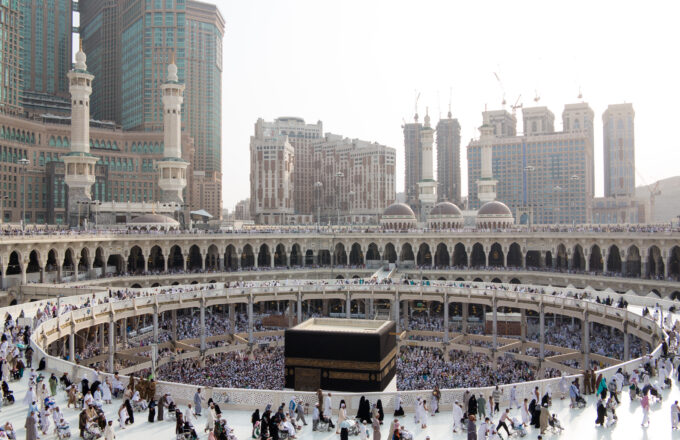
Every year, millions of Muslims travel to Mecca to fulfill one of the most profound spiritual obligations in Islam, a journey that recently saw Saudi Arabia welcome an unprecedented 18.5 million people, including 1.61 million performing the major Hajj and over 15 million completing Umrah in early 2025 alone. At the heart of this massive gathering are the core kaaba rituals of Tawaf and Sa’i, which require immense physical stamina and deep spiritual presence. Understanding the proper tawaf guide and sai procedure ensures your pilgrimage is performed correctly, transforming a challenging physical journey into a deeply accepted act of worship.
The Spiritual Significance of Tawaf and Sa’i in Islam
The Kaaba represents the symbolic House of Allah on Earth. Circling it is not merely a physical action; it is a profound declaration of monotheism and devotion. The physical movement of Muslims orbiting the Kaaba mirrors the celestial bodies orbiting in the universe, placing the worshiper in harmony with all of creation.
Allah highlights the sanctity of this space in the Quran:
“And We entrusted Abraham and Ishmael to purify My House for those who circle it, who meditate in it, and who bow and prostrate themselves in prayer.” (Quran 2:125).
This verse establishes the Kaaba as a purified sanctuary dedicated entirely to worship.
Furthermore, the Prophet Muhammad (peace be upon him) emphasized the gravity of this ritual.
He stated:
“Circling around the House is similar to prayer, except that you speak during it. So whoever speaks in it, then speak only good.” (Tirmidhi, Hadith 960).
This highlights that while you are moving and walking, your state of mind must remain as focused and reverent as if you were standing in formal prayer.
Pre-Tawaf Preparations: Purity and Intention
Before stepping onto the white marble of the Mataf (the area around the Kaaba), you must prepare yourself physically and spiritually. Because Tawaf is likened to prayer, maintaining state of ritual purity (Wudu) is an absolute requirement. If your Wudu breaks during the circumambulation, you must leave, perform ablution again, and resume from where you left off.
Men must also ensure they are properly wearing their Ihram garments. Specifically for the initial Tawaf of Umrah or Hajj, men should expose their right shoulder (Idtiba) by passing the upper garment under the right armpit and draping it over the left shoulder.
Finally, formulate a sincere intention (Niyyah) in your heart. You do not need to shout it aloud, but you must consciously intend to perform Tawaf for the sake of Allah alone.
Step-by-Step Guide to Performing Tawaf
Navigating the crowds and maintaining your spiritual focus requires a clear understanding of the steps involved. This tawaf guide breaks down the process into manageable actions.
The Starting Point: Hajar al-Aswad (Black Stone)
Every circuit of Tawaf begins and ends at the Hajar al-Aswad (the Black Stone), located at the eastern corner of the Kaaba. The origins of this stone hold immense significance.
The Prophet Muhammad (peace be upon him) explained:
“The Black Stone descended from Paradise, and it was whiter than milk, then it was blackened by the sins of the children of Adam.” (Tirmidhi, Hadith 877).
When you align yourself with the Black Stone (often indicated by a green light on the wall of the mosque), you should ideally kiss it or touch it. However, given the massive crowds, this is rarely possible. Instead, face the stone, raise your right hand toward it, and say “Bismillahi Allahu Akbar” (In the name of Allah, Allah is the greatest).
Circuits of Tawaf: How to Perform Each Round
After greeting the Black Stone, begin walking with the Kaaba on your left side. You must complete seven full counter-clockwise circuits.
For men, the first three rounds should be performed at a brisk, jogging pace with short steps, a practice known as Raml. The remaining four rounds are completed at a normal walking pace. Throughout the process, stay outside the Hijr Ismail (the semi-circular wall adjacent to the Kaaba). Walking inside this area invalidates that specific round, as it is considered part of the Kaaba itself.
As you reach the Yemeni Corner (the corner right before the Black Stone), it is Sunnah to touch it with your right hand if possible, saying “Bismillahi Allahu Akbar.” If you cannot reach it, simply continue walking without pointing at it.
Recommended Supplications During Tawaf
There are no fixed, obligatory prayers you must recite during the majority of the Tawaf. This is a time for personal conversation with your Creator. You can recite verses from the Quran, send blessings upon the Prophet, or make personal duas in your own language.
However, there is a specific Sunnah supplication to recite between the Yemeni Corner and the Black Stone: “Rabbana atina fid-dunya hasanatan wa fil ‘akhirati hasanatan waqina ‘adhaban-nar” (Our Lord, give us in this world that which is good and in the Hereafter that which is good, and save us from the punishment of the Fire).
Completing Tawaf: Prayer at Maqam Ibrahim
Once you complete the seventh round at the Black Stone, your Tawaf is finished. Men should cover their right shoulder again. You must then proceed to Maqam Ibrahim (the Station of Abraham).
Here, you will offer two units (rak’ahs) of prayer. It is highly recommended to recite Surah Al-Kafirun in the first unit and Surah Al-Ikhlas in the second. If the area behind Maqam Ibrahim is too crowded, you may perform this prayer anywhere within the Masjid al-Haram. After the prayer, drink generously from the Zamzam water wells, making sincere supplications as you do.
The Ritual of Sa’i: Journey Between Safa and Marwah
Following the completion of Tawaf and the prayer at Maqam Ibrahim, pilgrims proceed to perform Sa’i. This ritual involves walking seven times between the two small hills of Safa and Marwah, enclosed within the Grand Mosque.
Historical Context and Spiritual Meaning of Sa’i
Sa’i commemorates the desperate, frantic search for water by Hajar (the wife of Prophet Ibrahim) when she was left alone in the barren desert with her infant son, Ismail. She ran between the hills of Safa and Marwah seven times, trusting entirely in Allah’s providence. Her complete reliance on God resulted in the miraculous springing forth of the Zamzam well.
The Quran immortalizes this profound act of faith:
“Indeed, the hills of Safa and Marwah are among the symbols of Allah. So whoever makes the major or minor pilgrimage to the Sacred House, let them walk between them.” (Quran 2:158).
By recreating her steps, pilgrims demonstrate their own submission and trust in Allah’s mercy.
Step-by-Step Guide to Performing Sa’i
This Sa’i procedure begins at the hill of Safa. Approach the hill, face the Kaaba, raise your hands in supplication, and praise Allah. Declare His greatness and recite the verse mentioning Safa and Marwah.
From Safa, walk toward Marwah. As you walk, you will encounter a section marked by green fluorescent lights on the ceiling and pillars. Men are required to run or jog at a moderate pace through this specific green-lit area, emulating the hurried steps of Hajar in the valley. Women should maintain their normal walking pace throughout.
Once you arrive at Marwah, face the Kaaba again, raise your hands, and make supplication just as you did at Safa. This completes one trip.
Supplications and Reflection During Sa’i
The journey from Marwah back to Safa constitutes the second trip. You will repeat this process until you complete seven total trips, ultimately finishing at the hill of Marwah.
Unlike Tawaf, Sa’i does not strictly require you to be in a state of Wudu, though it is highly recommended. Throughout the walk, engage your heart in remembrance of Allah (Dhikr). Reflect on the struggles of life, the pursuit of spiritual sustenance, and the ultimate relief that comes from relying on God. Use this time to ask for forgiveness, guidance, and blessings for yourself and your loved ones.
Completion of Sa’i
Upon finishing the seventh lap at Marwah, the Sa’i is complete. To officially exit the state of Ihram (if performing Umrah), men must have their hair completely shaved (Halq) or evenly trimmed (Taqsir). Women are required to trim a small portion of their hair, about the length of a fingertip. With this final act, the restrictions of Ihram are lifted, and the Umrah is fully accomplished.
Common Mistakes to Avoid During Tawaf and Sa’i
Navigating these kaaba rituals can be overwhelming, leading to unintentional errors. Being mindful of these common mistakes will help protect the validity of your worship:
- Losing Count of Circuits: In the dense crowds, it is easy to forget which round you are on. If you doubt the number of circuits you have completed, always assume the lesser number and build upon that to ensure you complete a full seven.
- Forcing Your Way to the Black Stone: While touching the Hajar al-Aswad is a Sunnah, harming others by pushing or shoving to get to it is strictly forbidden (Haram). Pointing from afar is entirely sufficient and carries the same reward when the area is crowded.
- Facing the Kaaba While Walking: Your left shoulder must face the Kaaba during the entire Tawaf. Some pilgrims make the mistake of turning their chest toward the Kaaba while walking, which invalidates that portion of the circuit.
- Reciting Duas in a Group Chorus: It is common to see groups following a leader shouting prayers loudly in unison. This disturbs the concentration of others and contradicts the Sunnah. Supplication should be a private, quiet conversation between you and your Lord.
- Ignoring the Green Lights in Sa’i: Men sometimes forget to jog between the green markers, or conversely, they run the entire length between the hills. The accelerated pace is specifically reserved for the marked valley area.
The Reward and Blessings of Performing Tawaf and Sa’i
The physical exertion required to complete these rituals yields unparalleled spiritual rewards. Every step taken around the Kaaba and between Safa and Marwah elevates the believer’s status and expiates sins.
Pilgrims return from these journeys spiritually cleansed. The Prophet Muhammad (peace be upon him) taught that whoever performs Hajj for Allah’s pleasure and avoids all forms of sin will return free from all sins, as if they were born anew. The Tawaf and Sa’i are the physical vehicles through which this profound purification takes place. They remind the believer that life itself is a journey centered around the Creator, demanding effort, trust, and continuous forward movement.
Embracing the Spiritual Journey
Fulfilling the rites of Hajj and Umrah is a transformative milestone in a Muslim’s life. By studying this tawaf guide and familiarizing yourself with the precise sai procedure, you protect your worship from errors and open your heart to the spiritual depths of the kaaba rituals.
Preparation is the key to a tranquil pilgrimage. Memorize your essential supplications, understand the physical demands of the journey, and condition yourself mentally to handle the immense crowds with patience and grace. May Allah invite you to His Sacred House, ease your path, and accept your devotion completely.